Why People-First Pages Still Win in 2026
A practical 2026 guide to building people-first pages that improve search visibility, trust, user experience, and conversions.
Date published
Last updated
In 2026, websites are being discovered in more places than before. Users find businesses through Google, AI answers, social platforms, directories, referrals, and direct brand searches. Yet the pages that perform best still have one thing in common: they are built for real people first.
A people-first page is not a soft content idea. It is a practical way to improve clarity, trust, search visibility, and conversion. The page explains the offer clearly, answers the questions users already have, removes friction, and gives visitors enough confidence to take the next step.
This matters because search engines and AI systems are also becoming better at evaluating usefulness. Pages that are clear, helpful, structured, and credible are easier for users to understand and easier for discovery systems to interpret.
What Is a People-First Page?
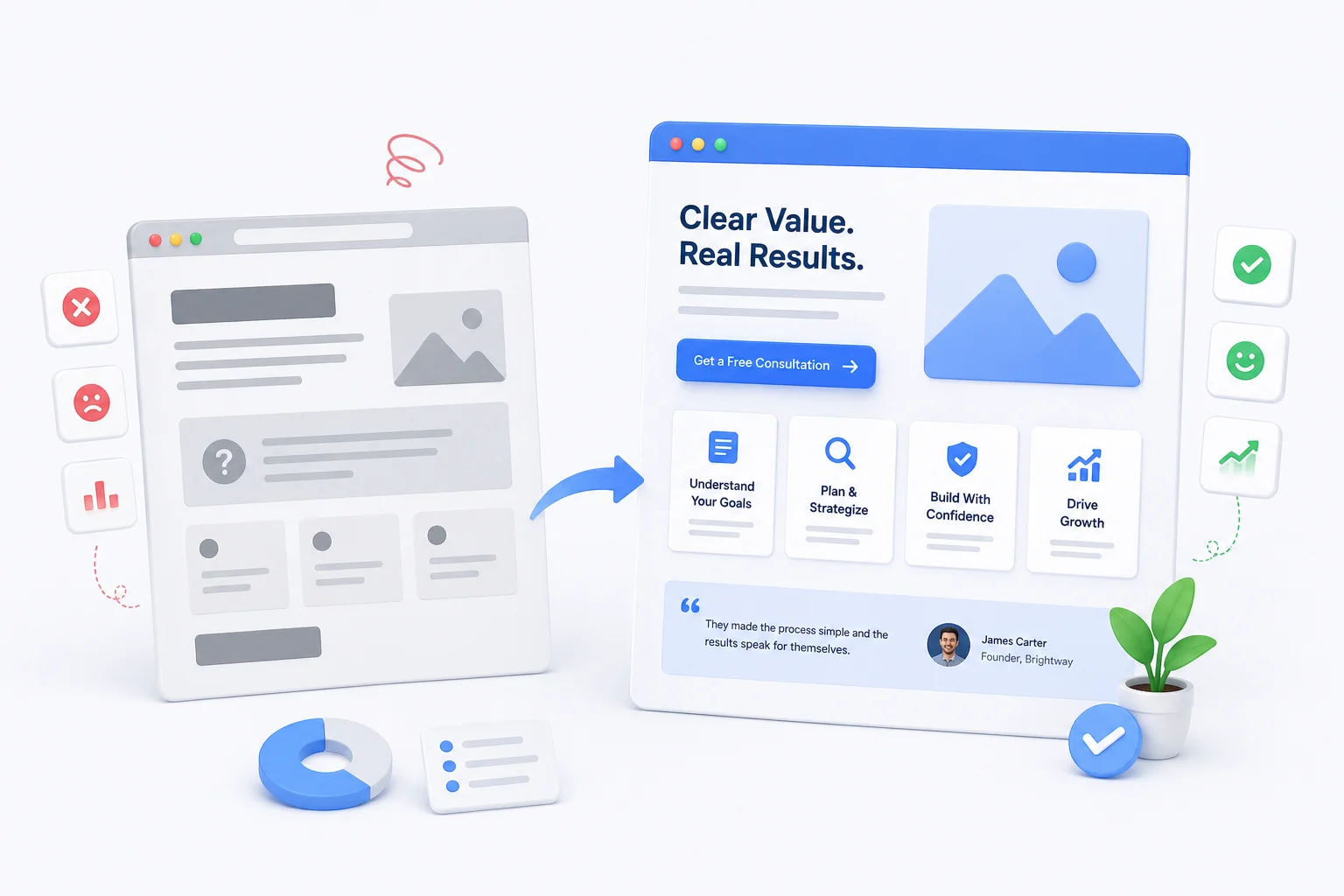
A people-first page is a page planned around user intent, not just keywords, design preferences, or internal assumptions. It helps a specific audience understand what is being offered, why it matters, how it works, and what they should do next.
In practice, this means the page should answer the visitor’s real decision-making questions before they need to ask them.
A people-first page usually includes:
- A clear headline that explains the page purpose
- Useful sections that match user questions
- Proof that supports the claims being made
- Fast loading and smooth mobile experience
- A relevant call-to-action based on the user’s stage
The goal is simple: make the page easier to understand, easier to trust, and easier to act on.
Why People-First Pages Still Matter in 2026
Many businesses are changing their content strategy because of AI search, zero-click results, and more competitive search pages. That shift is real, but it does not remove the need for useful web pages. It makes useful pages more important.
When users land on a page, they still evaluate the same things: relevance, credibility, clarity, speed, and effort. If the page feels generic or confusing, the user leaves. If the page helps them make sense of the offer quickly, they stay longer and are more likely to convert.
1. Search Is Moving From Keywords to Usefulness
Traditional SEO used to focus heavily on matching keywords, optimising metadata, and building pages around search volume. Those basics still matter, but search systems now look more closely at whether a page actually satisfies the query.
A people-first page supports this because it gives clear answers, uses logical structure, and avoids thin content. Instead of repeating terms, it explains the topic properly.
2. Users Have Less Patience for Generic Pages
Visitors compare options quickly. If a website sounds like every other provider, they have little reason to continue reading. People-first pages perform better because they speak to specific problems, situations, and outcomes.
This is especially important for service businesses. A user may not be ready to enquire immediately, but a clear page can help them understand the problem, compare solutions, and remember the brand later.
3. AI Discovery Rewards Clear Source Material
AI tools and answer engines work better with content that is clear, well-structured, and easy to summarise. If a page explains a topic in vague marketing language, it gives both users and machines less useful context.
People-first content helps because it uses direct explanations, meaningful headings, examples, and complete answers. This makes the page more useful beyond the click as well.
People-First vs Search-First Pages
A search-first page is usually built around ranking. It may include keywords and headings, but the reading experience can feel repetitive or shallow. A people-first page can still support SEO, but the structure is built around the user’s decision journey.
Key differences include:
- Search-first pages target terms. People-first pages answer intent.
- Search-first pages often repeat claims. People-first pages support claims with proof.
- Search-first pages may attract visits. People-first pages help visitors decide.
- Search-first pages optimise content. People-first pages optimise the full experience.
The strongest pages combine both. They are discoverable because they are structured well, and they convert because the content is genuinely useful.
How to Build a People-First Page in 2026
Step 1: Start With the User’s Actual Question
Before writing the page, identify what the visitor is trying to understand. A homepage visitor may want to know what you do. A service page visitor may want to know whether your solution fits their problem. A pricing page visitor may want to know what is included and what happens next.
Each page should be written for that level of intent. When the content matches the user’s stage, the page becomes more useful immediately.
Step 2: Explain the Value Early
A strong page should not make users work hard to understand the offer. The first screen should explain what the page is about, who it is for, and why it matters.
This does not mean using a clever headline. In most cases, direct language works better. Users should be able to understand the page even if they only scan the headline, subheading, and primary action.
Step 3: Use Headings That Guide the Reader
Headings should help users understand the page without reading every sentence. Avoid headings that sound decorative but do not explain the section. A useful heading tells the reader what they will learn next.
- Weak heading: Our Process
- Better heading: How We Improve Your Website in Clear Stages
- Weak heading: Solutions
- Better heading: Website Issues This Service Helps Fix
Clear headings also help search engines and AI systems understand the page structure.
Step 4: Add Proof Where Users Need Confidence
Proof should appear near the claims it supports. If you say the service improves conversions, show examples, results, testimonials, process details, or before-and-after context. If you say the team is experienced, show relevant work and explain what changed.
People-first pages do not ask users to trust claims blindly. They reduce uncertainty by making evidence visible.
Step 5: Make the Next Step Obvious
A page can be useful and still fail if the next step is unclear. The call-to-action should match the page intent. For a high-intent service page, that may be an enquiry. For an educational article, it may be reading a related service page or requesting an audit.
The important part is alignment. Do not force a hard sell when the visitor is still learning, and do not hide the enquiry path when the visitor is ready.
Common Mistakes That Make Pages Feel Less People-First
Many websites lose users because the page is built around what the business wants to say, not what the visitor needs to understand. These issues are common across homepages, service pages, landing pages, and blog content.
- Using vague claims such as “best-in-class” without proof
- Writing for internal stakeholders instead of customers
- Adding too many sections without a clear flow
- Hiding important information too far down the page
- Using CTAs that do not match user intent
- Ignoring mobile readability and page speed
Fixing these issues often has a bigger impact than adding more content. A clearer page usually performs better than a longer page with no direction.
People-First Page Checklist
Use this checklist when reviewing an important website page.
- Can users understand the page purpose in the first few seconds?
- Does the page answer the questions users are likely to have?
- Are the headings useful when scanned on their own?
- Is there proof near important claims?
- Is the content specific enough to feel relevant?
- Does the page load quickly and read well on mobile?
- Is the next step clear without being forced?
Key Takeaways
- People-first pages still win because users still need clarity and trust.
- Search and AI discovery are making useful, structured content more important.
- A strong page should answer intent, provide proof, and guide action.
- The best pages combine SEO structure with a better user experience.
Conclusion
People-first pages still win in 2026 because they are built around how users actually make decisions. They explain clearly, reduce uncertainty, support search visibility, and make the next step easier.
For businesses, this means page performance is not only about design or traffic. It is about whether the page helps the right person move forward with confidence. If a page is attracting visitors but not producing action, the first place to look is usually clarity, structure, proof, and user flow.
Frequently Asked Questions
Related reading

Funding Challenges: How to Prioritise Website Work When Budget Is Tight
A practical funding playbook for website projects: what to cut, what to protect, and how to ship a conversion-ready phase one.
UX That Engages: How to Design Pages That Move People to Action
A practical UX guide for improving engagement quality, reducing drop-off, and converting attention into qualified action.