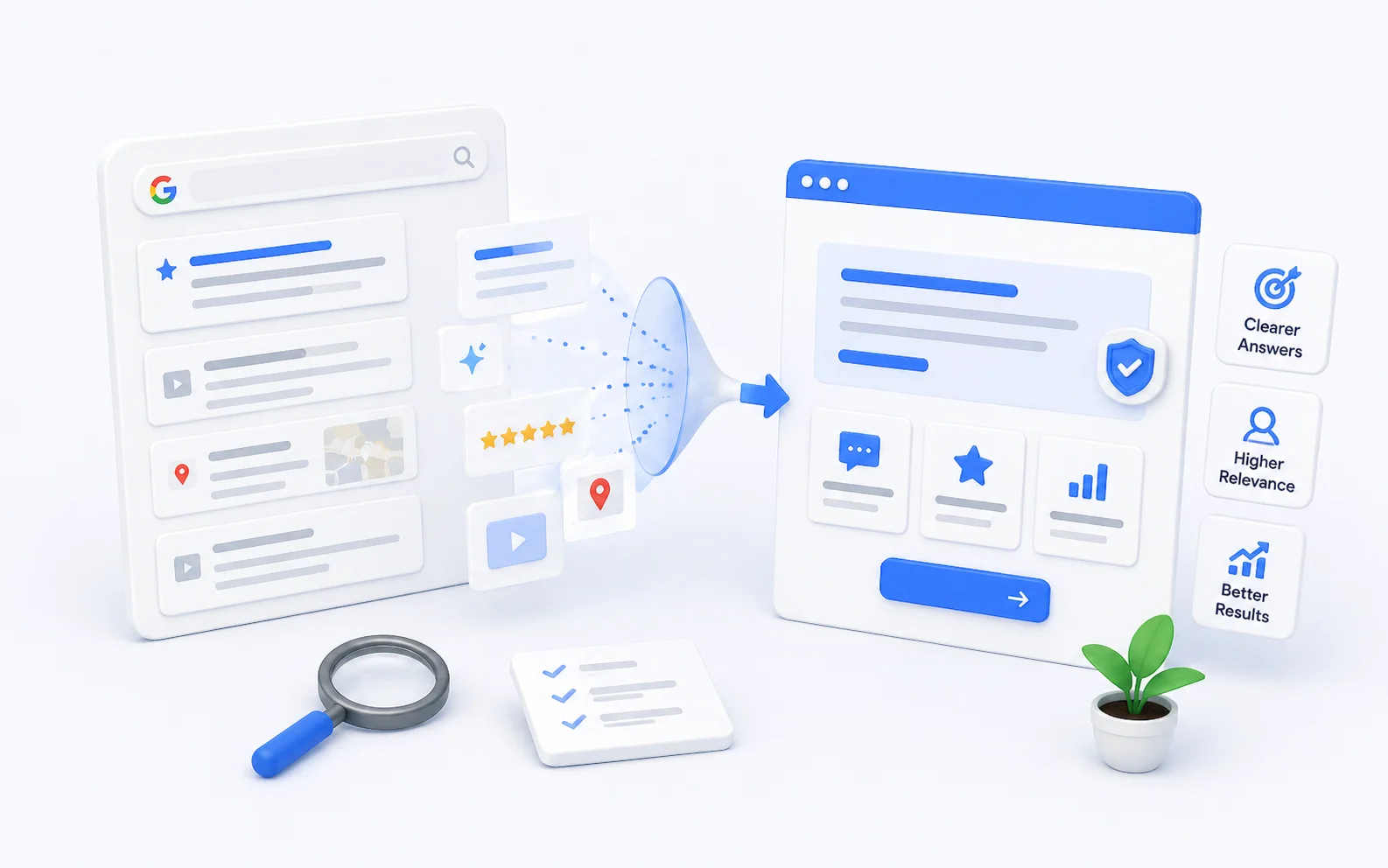
Why Search Results Are Getting Simpler
A practical guide to why search results are getting simpler and how to improve page clarity, CTR, trust, and conversions in 2026.
Date published
Last updated
Search is not getting smaller, it is getting more compressed. People now see summaries, snippets, local packs, videos, and AI-style answers before they choose a result.
That shift changes what your website page has to do. It is no longer enough to be present. Your page needs to be clear, specific, and useful enough to win the click and continue the answer once people arrive.
What "Simpler" Search Results Actually Mean
A simpler results page is designed to reduce decision effort. Search engines show the most decision-making signals early: direct answers, page titles, review snippets, business context, and relevance cues.
For businesses, this means your page content and metadata must communicate value faster. If your positioning is vague, users skip. If your content is clear and practical, you stay in consideration.
Why This Matters for Website Performance
Clicks Become More Qualified
When users click after reading richer results, they arrive with clearer intent. This can improve lead quality, but only if the landing page directly matches what the search result promised.
Weak Pages Lose Visibility Over Time
Pages with broad claims and thin explanations are less useful as source material. Strong pages explain one topic clearly, support claims with evidence, and help users take the next step without friction.
How to Adapt Your Pages in 2026
- Write page titles and H1s that reflect real search intent, not internal jargon.
- Answer the main question in the first two paragraphs with plain language.
- Use clear section headings that map to user questions and objections.
- Support important claims with examples, project outcomes, or process details.
- Make conversion paths obvious: contact, pricing context, timeline, or next action.
- Refresh key pages regularly so search systems and users see current, maintained content.
Common Mistakes to Avoid
- Using generic promises without explaining how the work is done.
- Publishing blog content that does not connect to service pages or business goals.
- Treating SEO as keywords only, instead of clarity, structure, and usefulness.
- Hiding key trust signals such as case studies, credentials, or process transparency.
A Practical 30-Day Focus
Start with your top five pages by impressions. Tighten titles and descriptions, rewrite intros for clarity, add stronger headings, and place one clear conversion action on each page. Then monitor click-through rate and engagement to see where messaging improves performance.
Conclusion
Search results may look simpler, but winning them is not about shortcuts. It is about building pages that are easier to understand, easier to trust, and easier to act on. Businesses that focus on clarity and usefulness will keep earning attention, even as search interfaces evolve.
Frequently Asked Questions
Related reading
Why People-First Pages Still Win in 2026
A practical 2026 guide to building people-first pages that improve search visibility, trust, user experience, and conversions.

Funding Challenges: How to Prioritise Website Work When Budget Is Tight
A practical funding playbook for website projects: what to cut, what to protect, and how to ship a conversion-ready phase one.