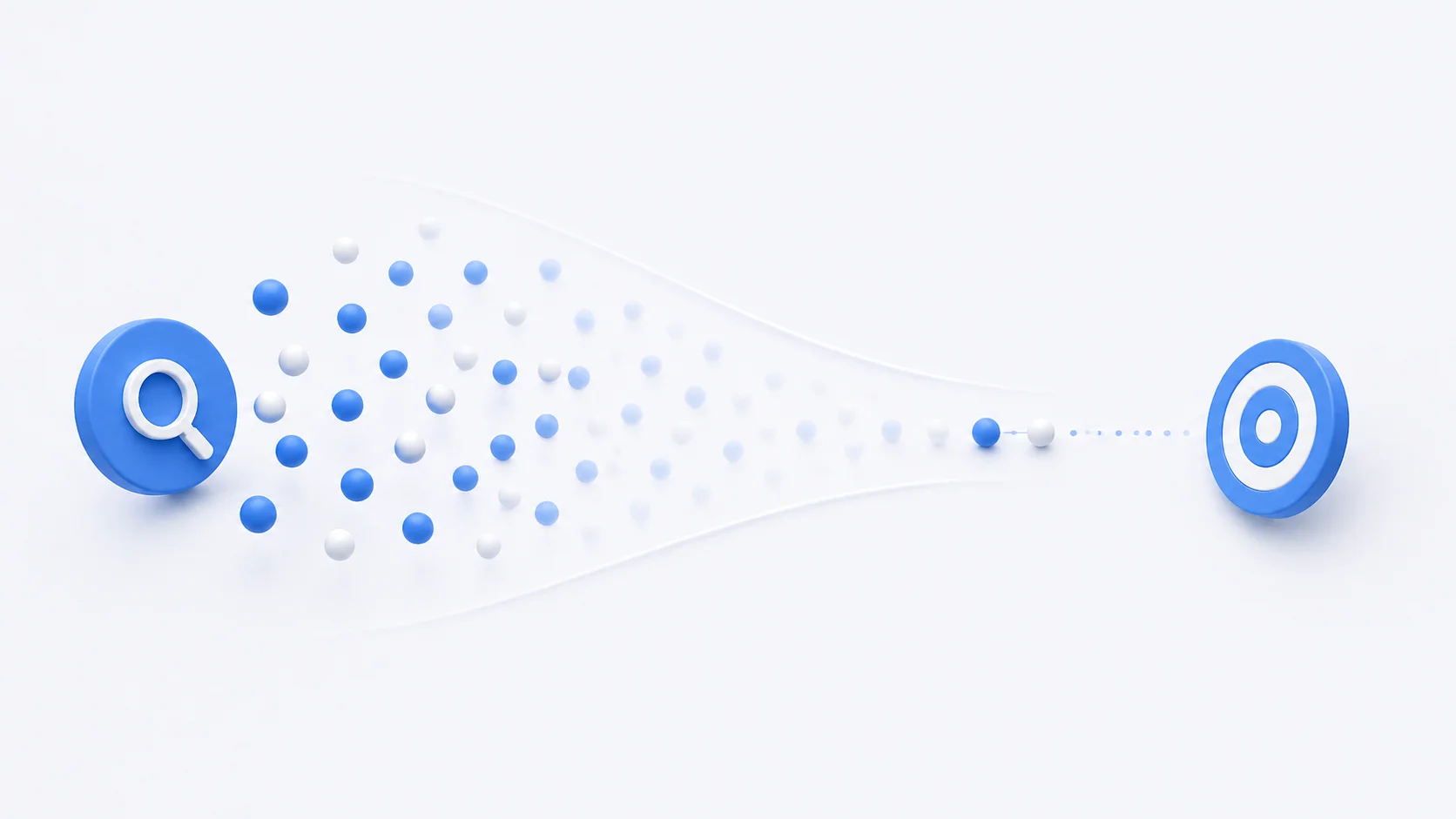
Why SEO Alone Does Not Bring Leads
SEO can drive traffic, but leads come from intent alignment, trust-building content, and conversion-focused page flow.
Date published
Last updated
Ranking is distribution, not demand capture. SEO can send visits, but leads only happen when the page matches intent, builds confidence, and gives a next step that feels proportionate to the visitor’s readiness.
Most teams mistake visibility for commercial traction. They celebrate impressions and top-of-funnel sessions while pipeline stays flat, then assume SEO is broken. In reality, the handoff from search query to page experience is broken.
Where SEO-Only Strategies Fail
The first failure is intent mismatch. A page may rank for broad informational keywords, but if the real business goal is consultations or qualified enquiries, you need pages that speak to evaluation-stage questions, not just awareness-stage definitions.
The second failure is weak decision support. Visitors ask: Is this team credible for my context? Is the scope clear? What happens after I click? When those answers are missing, traffic exits without intent being converted into action.
The third failure is CTA friction. For many services, asking cold visitors to book now is too aggressive. Better conversion paths use graduated CTAs: case study, checklist, pricing range, then consultation.
A Practical Model: From Traffic to Qualified Leads
- Map each target query to a business stage: discover, compare, decide, or buy.
- Rewrite page openings around the user’s operational problem, not your service label.
- Add proof that reduces risk: examples, constraints, process transparency, and expected outcomes.
- Offer a CTA ladder so users can move forward at different confidence levels.
- Track lead quality by page and query cluster, not just form volume.
Google’s people-first content guidance is useful here because it emphasizes satisfying user needs over producing search-engine-first pages. Use it as a quality filter when deciding whether a page deserves to rank and convert: Creating helpful, reliable, people-first content.
Metrics That Reveal Real SEO Value
If your dashboard still prioritizes sessions and average rank, you are measuring visibility, not outcomes. Add metrics that expose commercial signal:
- Lead-to-opportunity rate by landing page.
- Qualified enquiry share by keyword intent bucket.
- Time-to-enquiry after first organic session.
- Assisted conversions from informational pages into service pages.
This is also why service pages need one clear job and why structured pages perform better in modern search: clarity improves both discovery and conversion.
SEO is still essential. It just cannot work alone. The teams that win treat SEO as the front door, then design the room behind that door to move the right people toward a confident decision.
Related reading
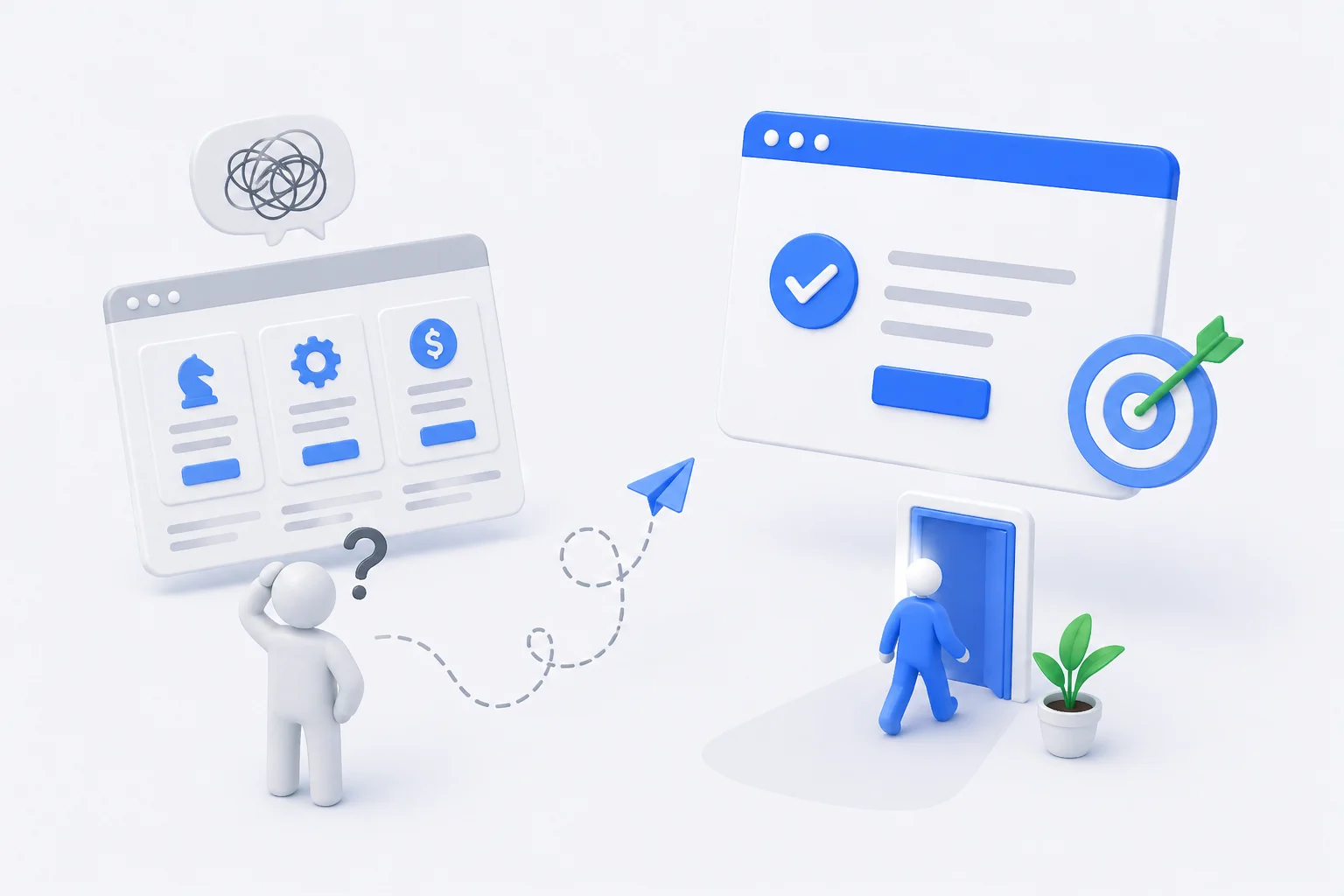
Why Service Pages Need One Job
Service pages convert better when they focus on one intent. Learn how to structure pages for clarity, trust, and action.
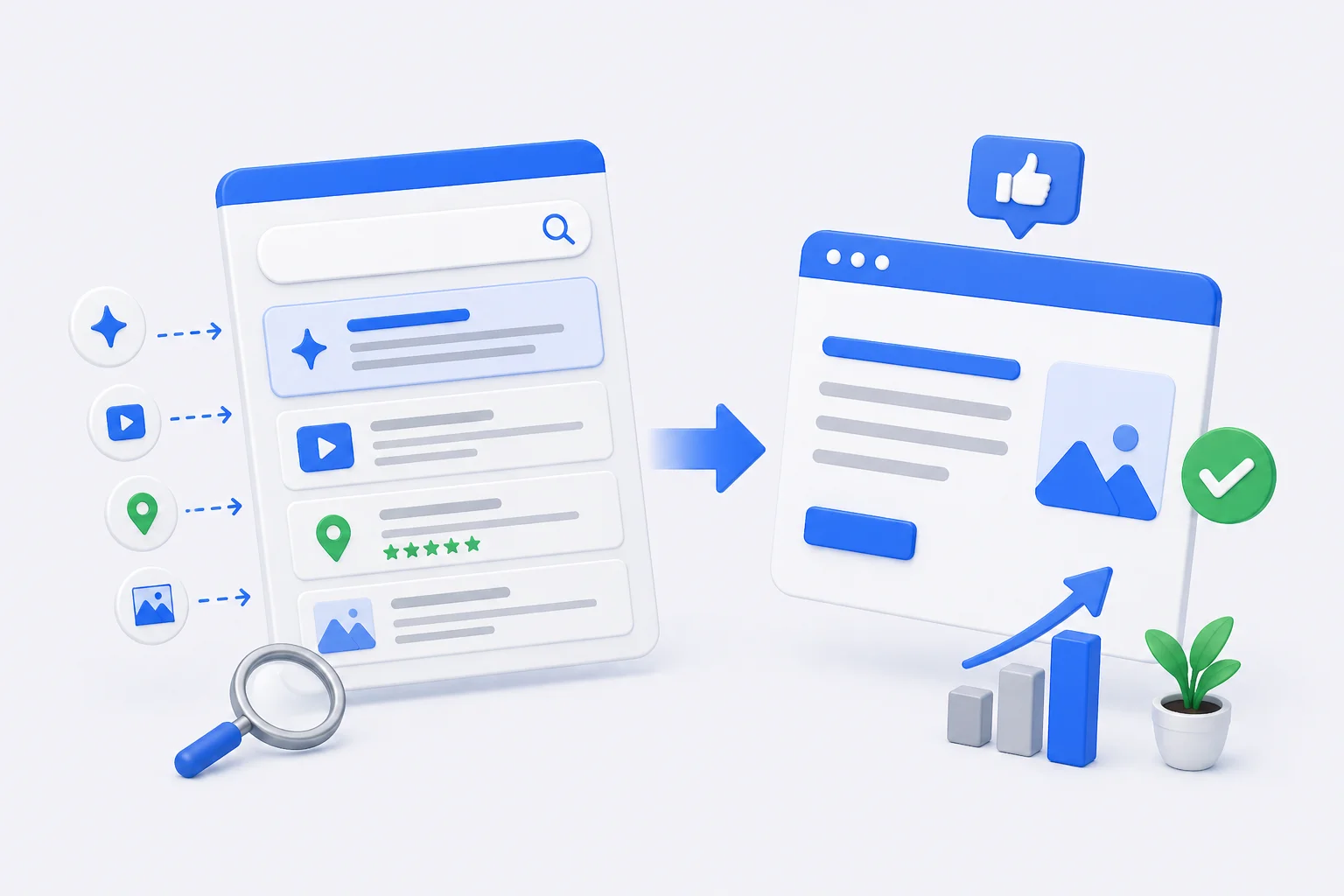
Why Answer Engines Reward Better Structure
Answer engines favor clear structure. Improve headings, context, and page architecture to increase discoverability and trust.